Table of Contents
- Why Finding Your Clothing Size Online Feels So Hard
- How to Measure Yourself for Clothes at Home
- How to Use a Clothing Size Chart the Right Way
- How to Tell If Clothes Run True to Size
- What to Do When You're Between Clothing Sizes
- How to Measure an Existing Garment for Comparison
- Fabric, Stretch, and Ease: Why Two Size Mediums Fit Differently
- Frequently Asked Questions
Last Updated: October 18, 2026
Why Finding Your Clothing Size Online Feels So Hard
Online shopping should save time. Yet many of us end up ordering two sizes of the same top, just in case.
Clothing size is a set of body measurements matched to a brand's own fit standard.
That is why a medium from one shop can feel tight while a medium from another feels loose.
The good news? A soft measuring tape, ten minutes, and a little patience solve most of it.
How to Measure Yourself for Clothes at Home
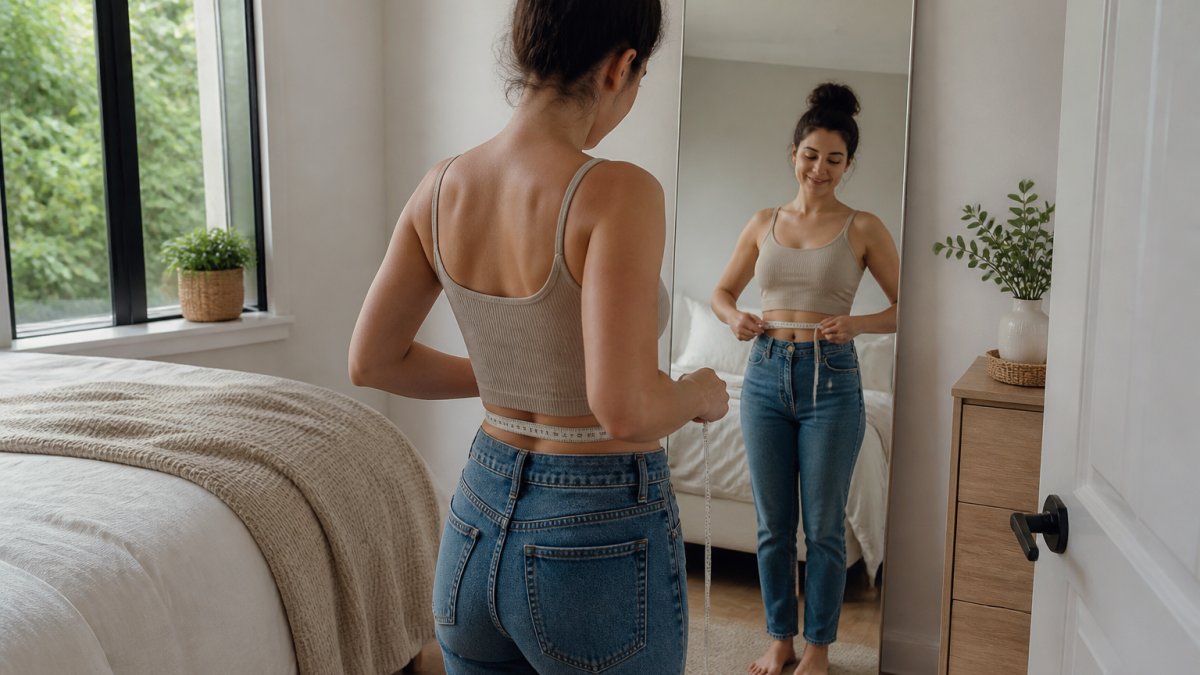
The best way to measure yourself for clothes is to use a soft measuring tape over light clothing, keep the tape level, and write each number down.
Here is the order we recommend:
- Wear thin clothing or underwear only.
- Stand in front of a full-length mirror.
- Keep the tape snug but not tight.
- Write every number down as you go.
- Measure twice to catch errors.
Bust, Waist, and Hip: The Three Measurements That Matter
These three numbers do most of the work. Get them right and most size charts will guide you well.
- Bust or chest measurement: Wrap the tape around the fullest part of your bust, keeping it level under your arms and across your back.
- Waist measurement: Find your natural waistline, the narrowest point above your belly button. Bend sideways and the crease that forms marks it.
- Hip measurement: Measure around the fullest part of your hips and seat, usually 18 to 23 cm below your waist.
Height and weight can help as a rough check, but measurements beat both every time. A size calculator or size advisor that only asks for height and weight will always be less accurate than one that asks for real numbers.
Common Measuring Mistakes That Throw Off Your Size
Most sizing errors come from technique, not from the body.
- Measuring over thick clothing or a padded bra
- Letting the tape droop at the back
- Pulling the tape too tight and losing a full size
How to Use a Clothing Size Chart the Right Way
To use a clothing size chart, match your own measurements to the chart's numbers rather than to the letter on the label. Always read the chart in the brand's own size guide, not a generic conversion table.
Here is the process:
- Find the size guide on the product or brand page.
- Note whether it lists body measurements or garment measurements.
- Compare your bust, waist, and hip to the closest row.
- If you fall between rows, size up for a looser fit.
- Check the size conversion section for international sizing.
A good size guide lists each size with a measurement range, not just S, M, L labels. Those letters mean very little on their own.
How to Tell If Clothes Run True to Size
Clothes run true to size when the brand's size chart matches standard body measurements and customer feedback agrees. There is no perfect test, but a few signals tell you a lot before you buy, and a repeatable method beats scrolling reviews at random.
Read the size chart against the fit notes
Start with the brand's own size guide. A chart that lists body measurement ranges per size is more trustworthy than one that lists only S, M, L. Then read the product description for fit language:
- "True to size" means the chart should match your measurements directly.
- "Runs small" means you should size up from your chart row.
- "Runs large" means you should size down.
If the chart and the fit notes disagree, trust the fit notes, they reflect how the brand intends that specific garment to sit.
Use customer fit reviews as data, not noise
Reviews are most useful when you filter them for fit-specific comments rather than style praise. Look for reviews that mention the reviewer's usual size, height, or measurements alongside the size they ordered. A pattern of three or more reviews saying "runs small in the shoulders" is a stronger signal than one enthusiastic five-star review.
- Ignore reviews that only discuss color, delivery, or style.
- Weight reviews that state the reviewer's body size or usual brand size.
- Treat a cluster of "had to exchange" comments as a sizing warning.
Check the fabric and construction
Fabric content and construction change how a garment behaves against the same body measurement.
- Knit fabrics with elastane stretch and forgive small gaps.
- Woven fabrics like linen, cotton poplin, and denim hold their shape and show fit errors.
- Lined garments fit differently from unlined ones because the lining adds structure.
Ask customer service the right question
A vague "does this run true to size?" gets a vague answer. Ask instead: "My bust is X cm and my waist is Y cm, which size in this style would you recommend, and does the fabric stretch?" That gives the brand something concrete to match against its own chart.
Use a returns and fit-feedback checklist
Before you order, confirm the following so a sizing miss stays low-risk:
- What is the return window, and does it start from delivery or order date?
- Is return shipping free, or is it deducted from the refund?
- Are sale or discounted items final sale?
- Does the brand offer exchanges, and is exchange shipping free?
- Are there customer fit photos or a fit finder tool on the product page?
- Does the brand publish garment measurements you can compare to a piece you already own?
At JW Rose Boutique, we list fit notes on each piece and offer in-person open houses so you can try items on before committing. That takes the guesswork out of online sizing.
What to Do When You're Between Clothing Sizes
When your measurements fall between two clothing sizes, size up for comfort and size down only for a close, tailored fit. Most people are happier with the larger option. But the better answer depends on which measurement is off, what kind of garment you are buying, and how the brand describes its fit. Use the framework below instead of guessing.
Step 1: Identify which measurement is between sizes
Your bust, waist, and hip rarely land in the same size row. The measurement that sits furthest from a chart row should drive your decision, because that is the area most likely to feel wrong.
- Bust between sizes: size up if the garment is buttoned, lined, or structured. Size down only if the fabric has clear stretch and you want a close fit.
- Waist between sizes: size up and plan to belt or take in. Waistbands are easier to alter than side seams.
- Hip between sizes: size up. Hips are the hardest area to let out because there is usually little seam allowance.
Step 2: Match the decision to the garment type
The same body measurement calls for different choices depending on what you are buying.
| Garment type | Between sizes? | Recommended choice | Why |
|---|---|---|---|
| T-shirt or knit top | Yes | Size down for a close fit, up for relaxed | Knits stretch and recover |
| Button-up shirt | Yes | Size up | Tight bust pulls buttons open |
| Trousers or jeans | Yes | Size up at the waist, then belt | Waistbands alter easily; hips do not |
| Dress with a defined waist | Yes | Size to the bust and waist, then alter the hip | Bodice fit is hardest to fix |
| Outerwear or coat | Yes | Size up | You need room for layers underneath |
| Footwear | Yes | Size up half a size | Toe room matters more than heel slip |
Step 3: Read the brand's fit notes before you decide
A size chart tells you the numbers. Fit notes tell you how the brand intends the garment to sit.
- "Runs small" or "size up" in the product description is a direct instruction, follow it.
- "Relaxed fit" or "oversized" means the brand already built in ease, so sizing down may give a normal fit.
- "Slim fit" or "bodycon" means little ease, so size up if you are between sizes.
Step 4: Decide whether to order both
Ordering two sizes is a legitimate strategy, but only when the return policy makes it low-risk. Before you do it, check three things: the return window, whether return shipping is free or deducted, and whether sale items are final sale. If any of those is unfavorable, order the single size your framework points to and use the brand's exchange process if it misses.
A quick decision checklist
- Which measurement is furthest from a chart row?
- What garment type are you buying?
- What do the brand's fit notes say?
- Does the return policy make ordering two sizes sensible?
- If you must choose one, size to the hardest area to alter, usually the hip or bust.
If you are still unsure, order both and return the one that does not work. A clear return policy makes this low-risk.
How to Measure an Existing Garment for Comparison
Measuring a garment you already own is often the fastest way to find your clothing size online. Lay the piece flat, smooth it out, and measure across it with a soft tape.
Here is how:
- Chest: Measure straight across from armpit to armpit, then double it.
- Waist: Measure across the narrowest part of the waistband, then double it.
- Hip: Measure across the widest point below the waistband, then double it.
Compare those doubled numbers to the brand's garment measurements, not body measurements. This trick works especially well when you love the fit of something you already own.
Fabric, Stretch, and Ease: Why Two Size Mediums Fit Differently
Two garments labeled medium can fit completely differently because of fabric, stretch, and ease. Ease is the extra room built into a garment beyond your body measurements.
- Knit fabrics with stretch move with you and forgive small sizing gaps.
- Woven fabrics like linen or cotton hold their shape and show fit errors.
- A relaxed fit adds ease on purpose; a slim fit removes it.
This is why personalized fit matters more than the letter on the tag. Always check the fabric and fit notes alongside the size chart.
Frequently Asked Questions
How do I measure myself for clothes at home without help?
Use a soft measuring tape and stand in front of a mirror so you can check the tape is level. Measure your bust at the fullest point, your natural waist at the narrowest part of your torso, and your hips at the widest point. Keep the tape snug but not tight, and wear light clothing. Write each number down in centimeters or inches and compare them to the brand's size chart before you order.
What should I do if my measurements fall between two clothing sizes?
When your measurements land between two sizes, check the fabric first. Stretch fabrics like jersey or knits usually work better sized down, while woven fabrics with no give are safer sized up. Look at the garment's cut too: relaxed fits give more room, slim fits do not. If you are still unsure, contact the boutique directly. Many independent shops, including JW Rose Boutique, offer in-person try-ons to help you decide.
How can I tell whether clothing runs true to size before ordering online?
Read the brand's size chart and compare it to your own measurements rather than assuming a size medium is the same everywhere. Check customer reviews for comments about fit, and look for notes like 'runs small' or 'size up.' If the product page lists garment measurements in centimeters, compare those to a piece you already own. Brands that publish detailed size guides and fit notes are usually more reliable than ones that only list S, M, and L.
How do I convert clothing sizes between different brands?
Ignore the letter on the label and work from your measurements instead. Each brand builds its own size chart, so a size 10 at one boutique can match a size 12 at another. Note your bust, waist, and hip measurements in centimeters, then match them to each brand's chart individually. If a chart uses international sizing, use the conversion table as a starting point but always confirm against the brand's own numbers before you buy.
Finding your clothing size online takes a little upfront work, but it pays off in fewer returns and more pieces you actually wear. At JW Rose Boutique, we make that easier with real fit notes, a genuine range of sizes, local pickup, and in-person open houses for trying things on. Shop now and find your perfect fit with confidence.