
Last Updated: October 26, 2026
Quick Summary
Shoes for standing all day should combine cushioning that absorbs impact without collapsing, arch support that keeps your foot aligned, a firm heel counter for stability, and a grippy outsole suited to your floor type. The right pair reduces fatigue and prevents lasting pain from poor footwear choices.
- Test shoes in the afternoon or evening when your feet are swollen to ensure proper fit for working conditions.
- Prioritize forefoot cushioning and slip-resistant outsoles for retail and food service; prioritize resilient cushioning and easy-clean uppers for healthcare roles.
- Match the shoe to your floor type: hard surfaces like concrete and tile need cushioning and slip resistance, while carpet and mixed surfaces need flexibility and light weight.
- Avoid shoes that require a painful break-in period; discomfort in the store will worsen after eight hours of standing.
- A moderate shoe that balances all features usually outperforms an extreme shoe that excels at only one feature.
Table of Contents
- Why shoes for standing all day matter for comfort and health
- How to choose shoes for standing all day
- Best walking shoes for women who stand for hours
- Comfortable work shoes for women in retail, healthcare, and service roles
- Key features that make shoes work for prolonged standing
- Common mistakes when choosing shoes for standing all day
- Find your perfect pair at JW Rose Boutique
- Frequently Asked Questions
Why shoes for standing all day matter for comfort and health
Your feet carry you through every shift, every commute, every errand. Research into footwear and gait shows that daily footwear choices affect locomotor health throughout the life course, influencing everything from your arches to your lower back.
At JW Rose Boutique, we understand that finding shoes for standing all day isn't about luxury, it's about function. The right pair supports your feet, reduces fatigue, and lets you focus on work instead of aching soles.
The good news? Choosing shoes for standing all day is straightforward once you know what to look for.
How to choose shoes for standing all day
Selecting shoes for standing all day starts with understanding your foot's needs.
Once you know where your feet hurt, prioritize support in those zones. Cushioning matters, but it's not everything.
Width options are crucial. Many women struggle with shoes for standing all day because standard sizing doesn't fit their feet.
Finally, test shoes in the afternoon or evening, not the morning.
Best walking shoes for women who stand for hours
Look for a cushioned base that absorbs shock without feeling unstable, with underfoot support firm enough to prevent rolling inward or outward.
Breathability matters too. Your feet spend hours in these shoes, and moisture buildup leads to discomfort and odor.
Many women find that gel or gel-infused insoles provide extra cushioning where they need it most, conforming to the foot's shape and distributing pressure more evenly.
Comfortable work shoes for women in retail, healthcare, and service roles
Most roundups treat "work shoes" as one category. In practice, the demands of a retail floor, a hospital corridor, a restaurant line, and a warehouse aisle pull in different directions. Use the breakdown below to match features to your actual environment rather than buying the most cushioned shoe on the shelf.
Retail and service floors: hard surfaces, constant pivoting
Retail and hospitality shifts are usually spent on tile, polished concrete, or low-pile carpet, with frequent turns, squatting, and short bursts of walking. Prioritize forefoot cushioning, a stable heel, and a rubber outsole that grips smooth floors.
Dress codes vary. Many retail and hospitality employers allow a clean, solid-color athletic or walking shoe; some require closed-toe, non-canvas uppers. Check your handbook before buying, and favor uppers that wipe clean, such as leather or synthetic leather, over mesh if spills are common.
Healthcare: long shifts, hard floors, and cleaning protocols
Hospital and clinic floors are hard, and shifts often run 10 to 12 hours. Fluid exposure is routine, so uppers that wipe clean with a facility-approved disinfectant are practical, and closed-toe designs with minimal seams reduce places where fluids and bacteria collect.
Cushioning should be resilient rather than plush. A midsole that compresses easily will bottom out midway through a long shift.
Food service and hospitality: wet, greasy, and unpredictable
Kitchens, bars, and back-of-house areas combine water, oil, and uneven mats. Slip resistance is the non-negotiable feature here. Look for a rubber outsole with deep, multidirectional grooves and a compound described as slip-resistant; smooth or blown-rubber soles are a hazard on wet tile. Avoid mesh uppers if you work near fryers or sinks, because hot liquids and grease pass straight through. Easy-clean leather or coated synthetic uppers and a closed heel are safer choices.
Teaching and warehouse work: distance plus standing
Teachers alternate standing, walking, and crouching on tile or carpet, often covering several kilometers a day. A lightweight walking shoe with forefoot flexibility and moderate cushioning works better than a stiff, maximal shoe. Warehouse roles add concrete floors, repetitive lifting, and sometimes safety-toe requirements.
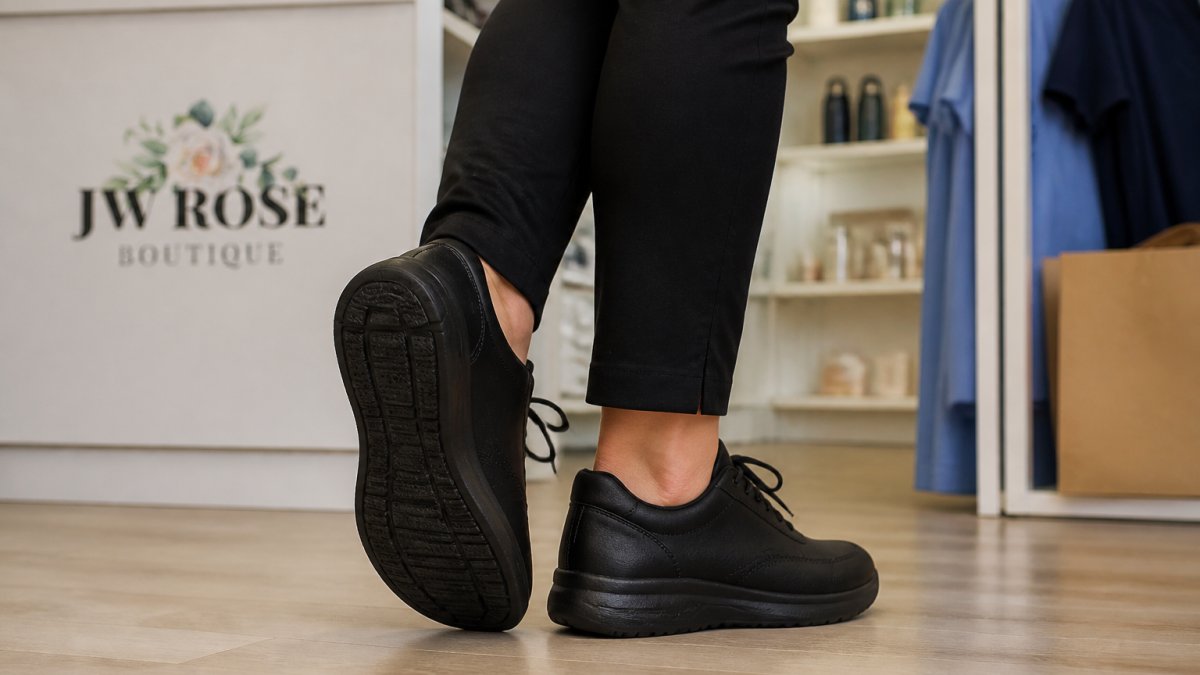
You might also explore best comfortable work clothes and best comfortable work pants for women to build a complete comfort strategy for your workday.
Key features that make shoes work for prolonged standing
Feature lists are easy to write and hard to use. The table below explains what each feature actually does, who tends to benefit, and the trade-off to watch for, so you can weigh one shoe against another instead of counting buzzwords.
Cushioning: shock absorption versus stability
Cushioning is the midsole's ability to compress under load and return energy. Softer foams absorb more impact but can bottom out under sustained standing, especially for heavier wearers or long shifts; firmer foams feel less plush but hold their shape longer. Press your thumb into the midsole: it should give slightly and spring back, not collapse or feel like a brick.
Arch support: alignment versus accommodation
Arch support keeps the foot from pronating excessively (rolling inward) or supinating (rolling outward), reducing the stabilizing work your leg muscles do over a shift. Shoes build this in through a shaped footbed, a medial post, or a contoured insole. Neutral arches usually do fine with a shaped footbed; flat feet often benefit from a more pronounced arch and firmer heel; high arches may need extra cushioning under the ball and heel rather than aggressive arch pressure.
Stability and heel hold: the overlooked pair
A firm heel counter wraps the heel and limits side-to-side motion, which matters most on smooth or wet floors and during quick turns. A wide, flared outsole adds a broader base and reduces the chance of rolling, at the cost of weight and flexibility. If you've had ankle sprains or feel wobbly on tile, stability features are worth the extra grams; if you walk long distances, too much stability structure can feel clunky.
Rocker geometry: roll-through versus ground feel
A rocker sole curves upward at the toe (and sometimes the heel) so the foot rolls forward instead of flexing sharply, reducing forefoot strain during long periods of walking. The trade-off is less ground feel and, for some wearers, a feeling of being tipped forward. If your discomfort is at the ball of the foot, a moderate rocker can help; if you need balance and proprioception, a flatter, more flexible sole may suit you better.
Width, volume, and toe-box room
Width is not just left-to-right; it's also volume (height) and toe-box shape. A shoe that's wide enough but too shallow presses on the top of the foot, and a pointed toe box compresses the toes even in a wide size. Look for a toe box that lets your toes spread flat, and check that the widest part of your foot aligns with the widest part of the shoe. Feet swell during the day, so fit at the end of the day.
Outsole grip and slip resistance
Traction comes from the outsole compound and tread pattern. Rubber with deep, multidirectional grooves grips wet tile and smooth concrete better than blown or smooth rubber. If you work around water, grease, or polished floors, treat slip resistance as a safety feature, not a comfort extra. Aggressive treads can feel stiff and may track debris.
Weight and breathability
Lighter shoes reduce the energy cost of lifting each foot over thousands of steps. Breathable uppers (mesh, perforated leather) reduce moisture and heat, but mesh is a poor choice around spills and grease. If you need easy-clean uppers, accept slightly less breathability and pair the shoes with moisture-wicking socks.
Understanding what each feature does helps you choose shoes that match your specific needs and work environment.
| Feature | What it does | Best for | Trade-off |
|---|---|---|---|
| Cushioning | Absorbs impact and reduces fatigue | Hard floors and long shifts | Soft cushioning can bottom out; firm cushioning feels less plush |
| Arch support | Keeps foot aligned, reduces muscle strain | Flat feet and pronation issues | Too much arch pressure can feel uncomfortable for high arches |
| Heel counter | Limits side-to-side heel motion | Smooth floors and quick turns | Adds weight and reduces flexibility |
| Rocker sole | Reduces forefoot strain during walking | Ball-of-foot discomfort | Less ground feel and balance feedback |
| Width and toe box | Prevents pressure points and compression | Wide feet and toe spreading | Wider shoes may feel less snug or styled |
| Outsole grip | Prevents slipping on wet or smooth surfaces | Kitchens, bathrooms, and wet floors | Aggressive treads can feel stiff and track debris |
| Breathability | Reduces moisture and heat buildup | Long shifts in dry environments | Breathable mesh fails near spills and grease |
Common mistakes when choosing shoes for standing all day
The biggest mistake is prioritizing appearance over function.
Many women buy shoes that are too tight, thinking they'll stretch or break in. Shoes for standing all day shouldn't require a painful break-in period.
Another common error is ignoring width.
Don't assume all cushioning is equal.
Finally, avoid buying shoes without trying them on. Online shopping is convenient, but shoes fit differently on different feet.
Find your perfect pair at JW Rose Boutique
Finding shoes for standing all day doesn't mean settling for generic athletic wear or uncomfortable dress shoes.
We offer flexible options to make shopping easier: local pickup so you can avoid shipping delays, and in-person open houses where you can try shoes on and get personalized guidance.
Shop our latest seasonal arrivals with the confidence that every piece we carry meets our standards for quality and wearability. When you find your perfect pair, you'll feel the difference immediately, and through every shift.
Frequently Asked Questions
What features should I look for in shoes for standing all day?
Prioritize cushioning, arch support, and a slip-resistant outsole. Cushioning reduces impact on your feet and legs during long hours of standing. Arch support stabilizes your foot and prevents fatigue. A grippy tread or rubber outsole keeps you safe on wet or slippery floors, especially important in healthcare, retail, or service environments. Width options matter too, shoes that fit your foot shape prevent blisters and discomfort.
Are cushioned or supportive shoes better for standing all day?
Both matter equally. Cushioning absorbs shock and reduces foot fatigue during prolonged standing, while support at the heel, midsole, and arch prevents your foot from rolling inward or outward, which causes pain and instability. The best shoes for standing all day combine soft cushioning with structured support.
How often should walking shoes be replaced?
Most walking shoes last between 480 and 800 kilometers of use. For daily standing, that typically means replacing them every 6 to 12 months, depending on how many hours you stand and the shoe's durability. Signs it's time to replace your shoes include worn-down cushioning, compressed midsoles, or visible tread wear on the outsole. Worn-out shoes lose support and increase foot fatigue and pain.
What should I do if my shoes don't fit after I buy them?
JW Rose Boutique offers local pickup and in-person try-on options, so you can test shoes before committing. If you order online and the fit isn't right, our return process is straightforward, contact us for details on how to exchange or return your shoes. We know that sizing varies across brands, so we're here to help you find the right fit without the hassle of complicated shipping back and forth.
The right shoes for standing all day transform how you experience work. Comfort isn't a luxury, it's the foundation for a productive, pain-free day. Shop now at JW Rose Boutique and discover footwear that supports your body and your style.
