
Table of Contents
- Start With Your Body Measurements and Size Chart
- How to Choose the Right Size When Shopping Online
- How to Check Clothing Quality Online
- Select Colors and Styles That Match Your Skin Tone and Personal Style
- Understand the Online Clothing Return Policy Before You Buy
- Verify the Online Store's Security and Trustworthiness
- Choose Clothes You Will Actually Wear
- Frequently Asked Questions
Last Updated: October 10, 2026
Start With Your Body Measurements and Size Chart
Getting the right fit starts before you shop, and buying clothes online successfully begins with accurate measurements.
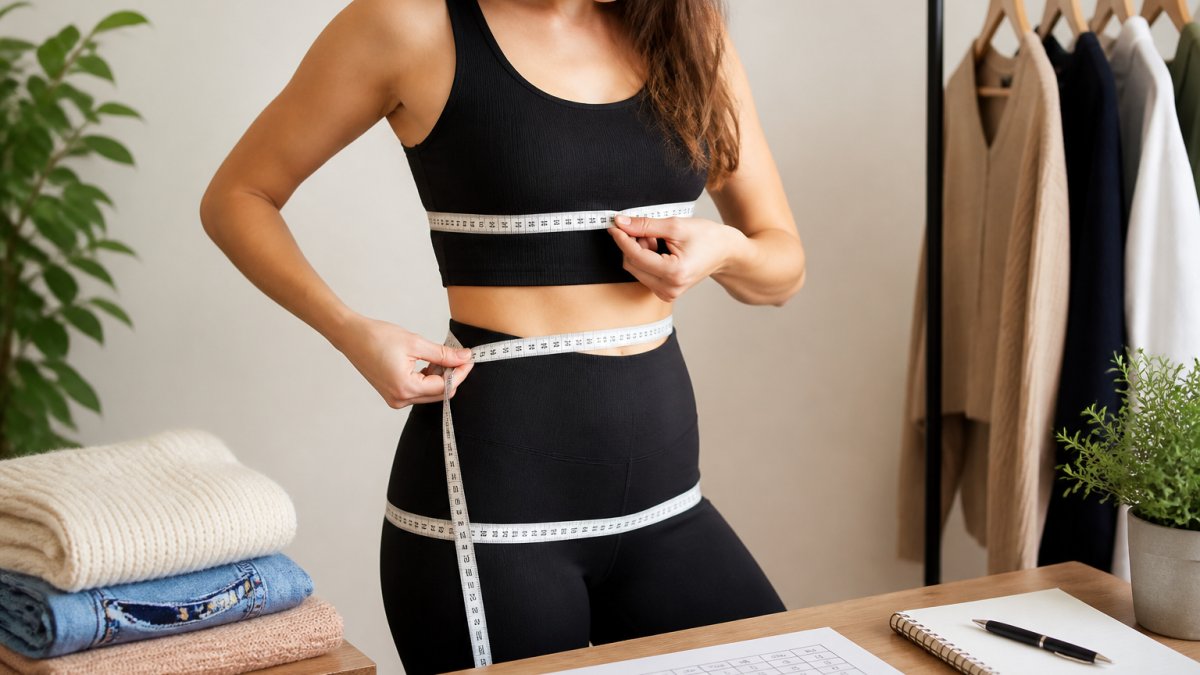
Every brand sizes differently; a size 12 at one store might be a size 10 at another. That's why size charts matter more than the label.
At JW Rose Boutique, we provide detailed size charts for every piece. Check these before adding anything to your cart.
How to Choose the Right Size When Shopping Online
The right size depends on how you want the garment to fit. Some pieces run loose, others fitted; read the product description to understand the intended fit.
Compare Garment Measurements, Not Just Size Labels
Don't rely on the size label alone. Compare actual garment measurements to your body. For example, a shirt labeled medium with a 96.5 cm chest will be loose on a 91.4 cm chest.
Most online stores list these measurements in their size charts:
- Chest or bust width
- Shoulder width
- Sleeve length
Lay these measurements against your own. This single step prevents most fit problems.
Read Customer Reviews for Fit Feedback
Look for reviews that mention sizing. Do shoppers say the item runs small, large, or true to size? This feedback is worth more than any marketing claim.
Pay attention to reviews from people with similar body shapes. If you have a fuller bust, find reviews from shoppers with that shape. Their fit experience will match yours more closely than someone with a different build.
How to Check Clothing Quality Online
Quality matters when you're buying online and can't touch the fabric. Use both photos and descriptions to guide your decision.
Examine Product Photos From Multiple Angles
Good retailers show the garment from the front, back, and sides, with close-ups of seams, zippers, and hems. These details reveal quality.
Check the photos for:
- Straight seams with no puckering
- Even stitching throughout
- Secure zippers and buttons
If the retailer only shows one angle or uses blurry photos, that's a red flag.
Review Fabric and Material Descriptions Carefully
Fabric makes or breaks how a garment feels and wears. Cotton breathes and softens with washing; polyester resists wrinkles but can feel plastic-like; blends offer a middle ground.
Read the full material content; a 100% cotton shirt behaves differently than an 80/20 cotton-poly blend.
JW Rose Boutique focuses on quality fabrics that hold up to regular wear. We describe exactly what each piece is made from so you know what to expect.
Select Colors and Styles That Match Your Skin Tone and Personal Style
Color matters as much as fit. The right shade makes you look vibrant. The wrong one drains your energy.
But personal style trumps color theory. Wear what makes you feel confident.
Look at product photos on different backgrounds.
Don't buy something just because it's trendy or on sale. Ask: Will I actually wear this? Does it match pieces I already own?
Understand the Online Clothing Return Policy Before You Buy
Returns happen, and the difference between a smooth return and a costly one is decided before you click "buy." Read the policy for specific numbers, not just the vibe.
The Return-Policy Checklist
Pull up the policy page and answer these questions in writing before you order:
- Return window. How many days from delivery, not from order date, do you have? Common windows run 14 to 30 days; some retailers extend to 45 or 60 during holiday periods.
- Condition requirements. Original tags attached? Unworn and unwashed? Some retailers reject returns if the tag is removed, even if the garment is unworn.
- Return shipping cost. Free prepaid label, flat-fee deduction, or you pay the carrier? A "free returns" banner often hides a restocking fee or a deduction from your refund.
Calculate the True Landed Cost Before You Buy
A $60 sweater isn't a $60 purchase once shipping, tax, and possible import charges are added. Run the math first:
- Item price.
- Shipping. Many retailers offer free shipping above a threshold (commonly $50 to $150). Below the threshold, expect $8 to $20 for standard domestic delivery.
- Sales tax. Applied based on the delivery address, not the retailer's location.
- Duties and import charges (cross-border orders). If the retailer ships from outside the country, the Canada Border Services Agency (CBSA) assesses duty and GST/HST on most commercial imports. Carriers such as Canada Post, UPS, FedEx, and DHL often charge a brokerage or handling fee on top, frequently $10 to $20 per parcel, before releasing the package. Some retailers collect these at checkout (DDP, or delivered duty paid); others leave them to be collected at the door (DDU). Always check which model applies.
- Return shipping, if you end up sending it back.
A cross-border order can look like a bargain until a $25 brokerage charge appears at delivery. If the retailer doesn't state who pays duties, assume you do.
Know Your Consumer Protections
Provincial and territorial consumer protection legislation generally requires retailers to disclose material terms, price, delivery timelines, and return conditions before purchase. If a retailer advertises a return window and refuses to honor it, that's a consumer-protection issue, not just bad service. Keep your order confirmation, the policy page as it appeared on your purchase date, and any chat or email exchanges.
A Pre-Purchase Return-Risk Score
Before adding to cart, score the order from 0 to 5, one point for each yes:
- Return window is at least 21 days from delivery.
- Return shipping is free or a flat fee under $10.
- Refund goes back to the original payment method.
A score of 4 or 5 is low-risk. A score of 2 or below means you are accepting real financial risk; only proceed if you are confident about fit and quality.
Verify the Online Store's Security and Trustworthiness
Buying online means sharing personal and payment information. The padlock icon is table stakes; what actually protects you is understanding how your payment method works, what your card network will do if something goes wrong, and how to spot a store that isn't what it claims to be.
The Basics Still Matter
- A padlock icon and a URL starting with
https://mean the connection is encrypted. That is a minimum, not a guarantee. - A real business address and phone number, not just a contact form.
- A privacy policy that explains what data is collected and how it is used.
Payment Methods and Your Chargeback Rights
Not all payment methods offer the same protection. Choose deliberately:
- Credit cards. Under the card networks' chargeback rules (Visa, Mastercard, American Express), you can dispute a charge for goods not received, goods significantly not as described, or unauthorized transactions. Most card issuers require you to attempt resolution with the merchant first, then file within a set window, commonly 60 to 120 days from the transaction date. Check your cardholder agreement for the exact deadline.
- Debit cards. Chargeback rights exist but are weaker, and the money leaves your account immediately, so a dispute ties up your cash while it is resolved.
- PayPal and similar platforms. Buyer protection typically covers items not received or significantly not as described, with a filing window (commonly 180 days). Claims are handled by the platform, not your bank.
A common pattern among fraudulent stores is a checkout that only accepts e-Transfer or crypto. That is a red flag, not a convenience.
Red Flags That Signal a Risky Store
- Prices dramatically below every other retailer for the same branded item.
- Product photos that look like they were pulled from another brand's catalog (reverse-image search them).
- A domain registered within the last few months; check the registration date through a public WHOIS lookup.
Protect Your Data at Checkout
- Use a unique, strong password for every retail account. A password manager makes this practical.
- Enable two-factor authentication where offered.
- Avoid saving card details on sites you do not shop with regularly.
- Shop on your own network, not public Wi-Fi, when entering payment information.
Check the Retailer's Track Record
Before buying from a store you haven't used, spend five minutes:
- Search the brand name plus "review" and "scam" and read past the first page.
- Check the Better Business Bureau for a complaint history and whether the business responds.
- Look at the retailer's social media for real customer comments, not just promotional posts.
- Confirm the return address matches the business address; a mismatch is a warning sign.
- Test customer service with a pre-sale question. How fast and how specifically they answer tells you what post-sale support will look like.
Choose Clothes You Will Actually Wear
The best fit and highest quality mean nothing if you never wear the item.
Before you buy, picture yourself wearing it. Where would you wear it? To work? Casual outings? A special event?
Be honest about your habits.
The pieces you wear repeatedly give you value. One versatile item worn 50 times beats five trendy pieces worn twice.
Buying clothes online doesn't have to be stressful.
At JW Rose Boutique, we make this process easier. We offer local pickup and in-person try-on sessions so you can see pieces before you buy. Shop our curated collection of stylish apparel and find pieces that work for you.
Frequently Asked Questions
How do I know what size to order when buying clothes online?
Start by measuring yourself (bust, waist, hips, length) and compare your measurements to the garment's size chart, not just the size label. Different brands and online stores size differently. Read customer reviews to see how pieces fit; many shoppers mention whether they sized up, down, or true to size. Check the product description for fabric content, as stretchy materials may fit differently than rigid ones. If the store offers local pickup or in-person try-ons, use that option to confirm fit before committing.
What should I check before buying clothes online to avoid wasted money?
Review product photos from multiple angles and zoom in to see seams, stitching, and fabric texture. Read the full product description, including material composition and care instructions. Check customer reviews for honest feedback on quality, fit, and durability. Verify the return and exchange policy; make sure you have enough time to try the item and ship it back if needed. Look for signs of a legitimate business: clear contact information, secure payment options, and transparent shipping costs. Ask yourself if you'll actually wear the piece with your existing wardrobe.
How do I check clothing quality online if I can't touch the fabric?
Examine close-up product photos to assess seam quality, hem finishing, and fabric appearance. Read the material description carefully; natural fibers like cotton and linen typically hold up better than low-quality synthetics. Customer reviews often mention durability and how the garment holds up after washing. Check the weight or thickness mentioned in the description. Look for details like reinforced seams at stress points. If the online store offers local pickup or in-person try-ons, use that to feel the fabric and inspect construction before purchase.
What should I look for in an online clothing return policy?
Check the timeframe for returns, ideally 30 days or more to give you time to try the item and arrange shipping. Confirm whether the store covers return shipping costs or if you pay. Look for a clear explanation of which items are returnable (some stores exclude final sale items or intimates). Verify the refund process: do you get your money back to your original payment method, or as store credit? Check if exchanges are available as an alternative to returns. Read reviews from other customers about their return experiences. A transparent, customer-friendly return policy is a sign of a trustworthy online store.