
Quick Summary
The best women's waterproof boots for rainy weather keep feet dry, grip wet ground, and stay comfortable all day. Check the construction first: sealed seams, a gusset or storm flap over the zip, and a bonded sole. Then match the shaft height and tread to how you actually move through the wet.
- Rain boots suit city walks and commutes; waterproof hiking boots suit rough trails and cold, wet ground.
- A boot labeled waterproof may not be sealed throughout, so check the seams, closure and sole.
- No boot is waterproof above its opening, so match shaft height to the deepest water you expect.
- Fully waterproof rubber shells trap sweat, so membrane boots with breathable linings feel drier on long wears.
- Dry boots away from heaters and stuff them with newspaper, since heat can warp rubber and crack leather.
Table of Contents
- Waterproof Boots vs. Rain Boots: What the Difference Means on a Wet Day
- How to Choose Rain Boots for Your Rainy-Weather Routine
- Waterproofing Limits and Construction Details to Check
- Comfortable Rain Boots for Walking Through a Rainy Day
- Rain Boot Sizing and Fit: Socks, Calf Width and Wide Feet
- Traction on Wet Surfaces and Long-Term Care
- Booking Your Fitting: Choosing Your Pair from JW Rose Boutique
- Frequently Asked Questions
Last Updated: November 5, 2026
Rain changes how a boot has to perform. A pair that looks sharp on a dry Ottawa-area sidewalk can soak through in ten minutes of steady drizzle, and a fashion pick that skids on wet pavement is no help at all. Women's waterproof boots for rainy weather need to keep feet dry, hold their grip, and still feel good after a full day on the feet. This guide from JW Rose Boutique walks through what to check before you buy, so your next pair works as hard as the weather does.
Rain boots are a practical category, and the reviews that rank well for this search focus on the same core qualities: waterproofing, traction, comfort, fit and durability. Use the following checklist when comparing options.
Waterproof Boots vs. Rain Boots: What the Difference Means on a Wet Day
Waterproof boots and rain boots are not the same thing, and the difference matters on a wet day. A rain boot is built to keep water out in puddles, drizzle and commutes, usually in a single molded or rubber-style piece. A waterproof boot, such as a hiking boot with a membrane, is built to handle rougher terrain and longer exposure.
For city walks and errands, a rain-style boot is usually the right call. For trail or cold, wet ground, a waterproof hiking boot may be the better tool.
Watch out: a boot labeled "waterproof" in a product name does not always mean the whole boot is sealed. Check the construction before you assume.
How to Choose Rain Boots for Your Rainy-Weather Routine
Start with how you actually spend a wet day. A short walk to the bus needs something different from a full shift on your feet or a muddy weekend outdoors. Ask yourself three questions: how long will I wear them, what surfaces will I cross, and what do I plan to wear with them?
For a daily-commute pair, prioritize a lower profile and a comfortable sole. For dressier looks, a mid-calf or chelsea-style boot covers more ground without a bulky shaft. A boot with a stable heel and a secure fit suits most rainy-weather routines, since you will be moving through puddles, curbs and stairs all day.
Waterproofing Limits and Construction Details to Check
Waterproofing is only as good as the seams, the closure and the sole. Look at how the upper meets the sole, whether there are stitched seams that could let water in, and whether the closure, such as a zip or pull-on, is sealed or open at the top.
A boot labeled "waterproof" in a product name does not always mean the whole boot is sealed. Construction varies widely, and the differences determine how much rain a pair can actually handle. Here is what to check.
Seam sealing and gussets. On zip-up or pull-on styles, look for a gusset, a flexible panel behind the zip, that blocks water from reaching the closure. A sealed zip or a storm flap over the zip adds another layer. On rubber boots, check that the sole is bonded, not just stitched, to the upper; a stitched-only joint can let water creep in at the welt.
Shaft height sets the ceiling. No boot is waterproof above its opening. A mid-calf boot keeps you dry in curb-height puddles and splashes from passing cars, but standing water over the shaft will pour in over the top. Match shaft height to the deepest water you expect, ankle boots for city drizzle, taller shafts for slushy crossings and deep puddles.
Closures and the top opening. A loose collar or an open zip at the top gives rain a path in, especially on windy days. Look for a snug collar, an adjustable strap, or a drawcord that cinches the opening. If you wear trousers over the boot, water can also run down the fabric and into the shaft, so tuck pants into the boot or choose a taller shaft in heavy rain.
Breathability trade-off. Fully waterproof construction traps moisture from sweat as well as blocking rain. Rubber shells are the least breathable; membrane boots and linings that wick moisture feel drier on long wears. If you plan to walk for hours, a membrane boot with a breathable lining usually beats a solid rubber shell for comfort, even though both keep rain out.
The article's construction checks come down to a few points worth comparing before you buy.
| Construction detail | What to check | Why it matters |
|---|---|---|
| Seam sealing and gussets | Gusset behind zip, sealed or storm-flapped closure | Blocks water reaching the closure |
| Sole bonding | Bonded sole, not stitched-only welt | Stitched-only joints can let water creep in |
| Shaft height | Match to deepest water expected | No boot is waterproof above its opening |
| Top opening | Snug collar, adjustable strap or drawcord | Loose tops let rain in on windy days |
| Breathability | Membrane or wicking lining vs. solid rubber | Rubber traps sweat as well as keeping rain out |
Comfortable Rain Boots for Walking Through a Rainy Day
Comfort decides whether you keep wearing a pair. Rain boots that rub at the heel or pinch the toes will end up by the door. Look for a cushioned footbed, a sole with some flex, and a shaft that does not dig into the calf when you walk.
Brown Leather Wooden Heel Long Chelsea Boots →
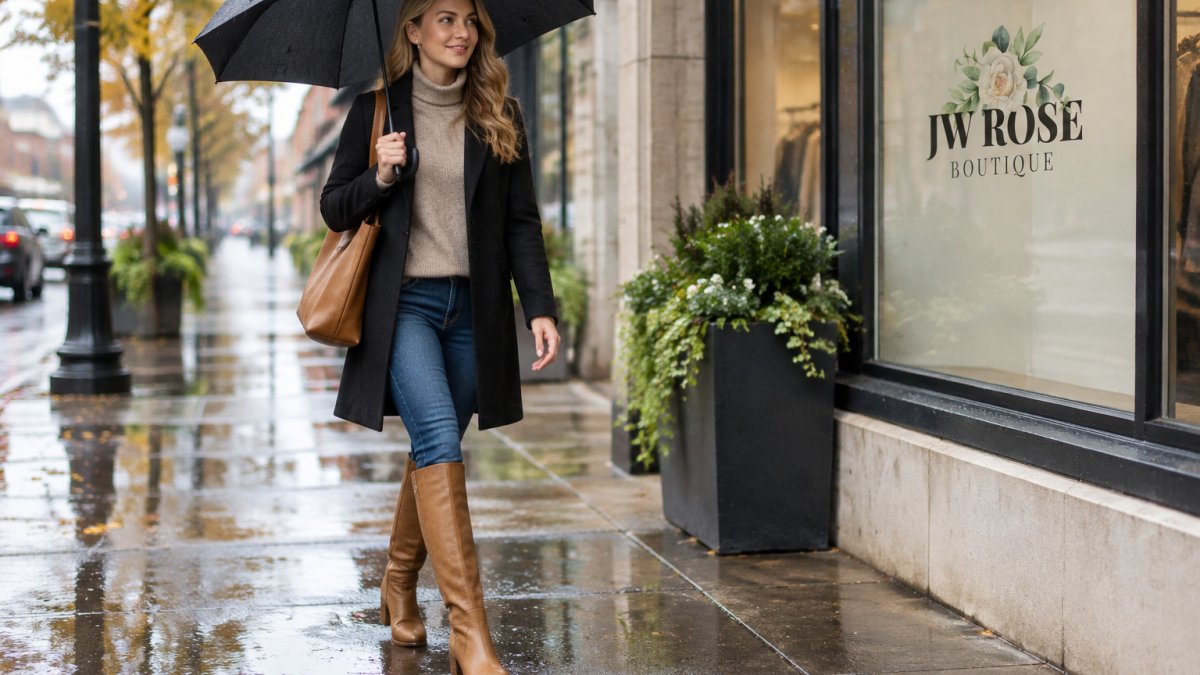
Our Gossip Boots in Whisky Colour are a good example of this balance. They have a 2-inch chunky heel for a little lift, and they are very comfortable and easy to pair with leggings or jeans. They are priced at $69.99 CAD. For a taller option with a wooden heel, the Brown Leather Wooden Heel Long Chelsea Boots sit about shin height and are priced at $89.99 CAD.

Rain Boot Sizing and Fit: Socks, Calf Width and Wide Feet
Fit is where many rain-boot purchases go wrong. Measure your foot, then consider the socks you plan to wear. A thick wool sock needs more room than a thin one, and a boot that fits well in the shop may feel tight in January.
Calf width matters for taller boots. Check the shaft width and whether the boot stretches or stays rigid. If you have wide feet, look for a roomier toe box and confirm the boot's width options before you order. Our Brown Leather Wooden Heel Long Chelsea Boots are described as not too tight for those with bigger calves, which is worth noting if that describes you.

For boots, the same logic applies: measure, compare the size chart, and check the return policy before you buy.
Traction on Wet Surfaces and Long-Term Care
Traction is the quality most people only notice when they slip. Wet tile, painted crosswalks and metal grates all reduce grip, and each surface rewards a different outsole design. Rather than trusting a generic "non-slip" claim, compare tread patterns and rubber compounds against the ground you actually cross.
Pavement and wet concrete. A shallow, closely spaced lug pattern with a softer rubber compound grips smooth pavement and painted lines well. Deep, aggressive lugs can feel skittery on hard flat surfaces because less rubber contacts the ground. For commuting and errands, a medium-depth tread with siping, small slits cut into the lugs, helps channel water out and improves grip on wet pavement.
Mud and soft ground. Deep, widely spaced lugs clear mud as you walk and bite into soft ground. A boot built for trails will outperform a smooth-soled fashion rain boot here, but the same deep lugs may feel clunky on city sidewalks. Match the tread to your dominant surface rather than expecting one pattern to excel everywhere.
Slick tile, metal grates and indoor floors. These are the highest-risk surfaces because water sits on top rather than draining away. A rubber compound that stays soft in cold weather grips better than a hard, stiff sole, which can skate across wet tile. If you walk into shops, transit stations or offices, test the boot on a smooth indoor floor before committing.
Heel and sole shape. A chunky heel concentrates weight and can improve bite on soft ground, but a wide, flat sole spreads contact and feels more stable on wet pavement. If balance matters to you, favor a lower, broader heel over a narrow one.
Care keeps rain boots performing season after season, and the right routine depends on the material. Dry boots at room temperature rather than near a heater, which can crack leather and rubber. Stuff newspaper inside to absorb moisture and hold the shape, and let pairs dry fully between wears, wearing damp boots repeatedly breaks down linings and seals.
Wipe off road salt and grit after winter walks, since salt draws moisture and can stain leather and degrade rubber. For leather and membrane boots, clean with a damp cloth, let them dry, then condition leather every few months to keep it supple and water-resistant. Rubber boots need less conditioning but benefit from a rinse and a check of the sole bond each season. Store boots upright in a dry spot rather than crammed into a damp closet.
Watch out: drying boots directly on a radiator or in front of a fire can warp rubber, crack leather and shrink the upper, so keep heat sources well away. A well-cared-for pair will keep its seal and look far better after several rainy seasons.
Booking Your Fitting: Choosing Your Pair from JW Rose Boutique
If you want to try boots on before deciding, JW Rose Boutique offers in-person open houses and local pickup options, alongside online ordering. Start with the Gossip Boots in Whisky Colour for a comfortable everyday pick, or browse the Black Chelsea Boots with Wooden Heel, priced at $84.99 CAD, for a versatile staple. Shop now and find the pair that keeps your feet dry and your look intact through the rainy season.

Frequently Asked Questions
What are the best women's boots for rainy weather?
The best choice depends on how you will use them. For walking in steady rain, look for a boot whose construction details are stated on the product page. For drizzle and short errands, a leather or PU leather boot with a shorter shaft is usually enough. At JW Rose Boutique, the Gossip Boots in Whisky Colour ($69.99 CAD) suit fall weather with a 2-inch chunky heel, while the Black Chelsea Boots with Wooden Heel ($84.99 CAD) work as a versatile everyday pair. Check the construction details listed on each product page before you buy for heavy rain.
Are rain boots and waterproof boots the same?
Not quite. Rain boots are typically made to keep water off the foot in light to moderate wet conditions, while waterproof boots use sealed construction and membranes designed to resist water for longer periods and in more demanding conditions. Read the listing for the material before assuming full protection.
How should women's rain boots fit?
Rain boots should fit snugly around the heel and ankle without pinching the toes. Leave enough room for the socks you plan to wear, since thick socks can make a boot feel tight. If you have larger calves, look for a shaft width that allows the boot to close comfortably without gaping or squeezing. The Brown Leather Wooden Heel Long Chelsea Boots ($89.99 CAD) are described as not too tight for bigger calves, which makes them a good reference point for that fit concern.
Can you keep your feet warm in waterproof rain boots?
Waterproof boots keep moisture out but do not add heat on their own. Warmth comes from the lining, the thickness of your socks and how well your feet move through the day. Choose a boot with a lining you find comfortable for the season, and wear socks made for cold weather. Avoid cotton socks, which hold moisture, and change them if your feet get damp.
