Last Updated: October 23, 2026
Quick Summary
Inclusive sizing in Canadian boutiques means stocking and clearly labeling a genuine range of sizes rather than a token extended option. Verify four things before you buy: the published size range, actual body measurements, written return terms, and whether the store stocks the sizes it advertises.
- A widely cited 2022 figure reports 65% of women wear size 12 or larger.
- Free Label states its garments are made in Canada in sizes 5X through XS.
- Read measurements, not the tag: check bust, waist and hip in centimetres or inches.
- Order one piece first, confirm the fit against the chart, then build.
- Sizing labels are not standardized, so a 14 can vary by several centimetres between brands.
Table of Contents
- Why Inclusive Sizing in Canadian Boutiques Matters
- Size-Inclusive Canadian Clothing Brands to Know
- How to Read Inclusive Clothing Size Charts
- How to Find Clothes That Fit Your Body
- Plus-Size Boutique Shopping Tips for Online Orders
- Inclusive Sizing in Canadian Boutiques: What to Check Before You Buy
- Frequently Asked Questions
Why Inclusive Sizing in Canadian Boutiques Matters
Inclusive sizing in Canadian boutiques means stocking and clearly labeling a genuine range of sizes, rather than a token extended option. It matters because the women's clothing market here is worth $8.2 billion across 4,192 businesses in 2026, according to IBISWorld's women's clothing stores industry analysis, yet range remains inconsistent from store to store.
Here is the number that should reframe how you shop: a widely cited 2022 figure reports that 65% of women wear size 12 or larger, per Gitnux's plus-size industry statistics. If that is anywhere close to accurate, a boutique that stops at size 12 is serving a minority of its own potential customers.
At JW Rose Boutique, we built our size range around that reality. Researchers at the University of Nevada, Reno ran four studies on how a retailer's size range shapes how shoppers judge the brand, summarized in Nevada Today's coverage of the inclusive sizing study. The takeaway for shoppers is simple: range is a signal. A store that carries your size is telling you something before you ever try anything on.
Below, we break down which size-inclusive Canadian clothing brands are worth knowing, how to read a size chart properly, and what to check before you order online.
Size-Inclusive Canadian Clothing Brands to Know
Start with the labels that publish their range openly. Free Label states that its garments are made in Canada and offered in sizes 5X through XS, per Free Label. Coverage of size-inclusive Canadian labels also points to ranges extending to 4XL and beyond, including Hilary MacMillan up to 4XL as noted by Canoe's brand coverage.
A word of honesty: extended sizing is still harder to find than it should be. A 2025 discussion thread on r/BuyCanadian included a shopper noting that while Canadian-made clothing stores are plentiful, few appear to carry XXL or larger. That is one person's comment, not a survey, but it matches what we hear from customers.
Here is how we would sort the landscape:
| What to look for | Why it matters | What to check |
|---|---|---|
| Published size range | Shows real stock, not marketing | Does the range go past 12? |
| Garment measurements | Sizing labels vary by brand | Bust, waist, hip in centimetres |
| Made-in-Canada claims | Supports local production | Named by the brand itself |
| Restock frequency | Signals genuine demand | Ask before you commit |
Our own approach is to publish cup fit and bust measurements on every piece, not just a letter size. The X-Large Padded Crochet Lace Longline Bralette lists cup sizes 40B through 32DDD at $20.00, and the Openwork Strappy Bralette splits its fit into two ranges with bust measurements in inches for each. That is what a usable size chart looks like.


How to Read Inclusive Clothing Size Charts
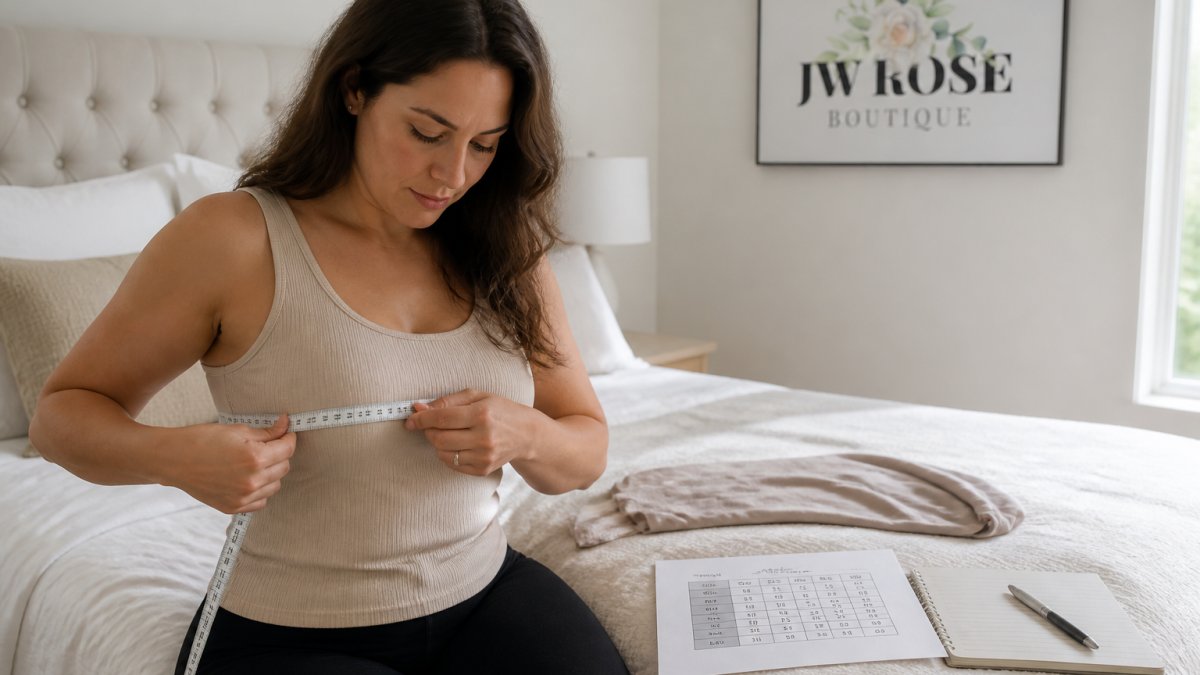
Read the measurements, not the number on the tag. A size chart is only useful if it lists actual body measurements for each size, in centimetres or inches, and tells you whether those numbers describe the body or the garment.
Three checks separate a real chart from a decorative one:
- Body or garment? A chart listing bust, waist and hip is measuring you. A chart listing "fits sizes 14-18" is guessing.
- Cup fit, not just band size. Our Crochet Daisy Longline Bralette lists cup sizes 34DD, 36D, 38C and 40B for one XL garment. That detail tells you more than "XL" ever will.
- Fabric stretch. A 92% cotton, 8% spandex bralette and a 100% cotton one fit differently at the same labeled size.
A 2022 study on body inclusivity and size availability in apparel examined how these factors influence purchase intention, available through California State University ScholarWorks. The practical point stands regardless: shoppers respond to stores that give them enough information to decide.
X-Large Padded Crochet Lace Longline Bralette →

How to Find Clothes That Fit Your Body
Finding clothes that fit comes down to matching three measurements to a published chart, then choosing fabrics with enough give for how you actually move. Most fit problems are information problems, not body problems.
Work in this order:
- Take bust, waist and hip measurements over light clothing, tape level and snug but not tight.
- Compare against the brand's chart, not the size you wear elsewhere.
- Check the fabric composition for stretch.
- Read the return policy before you order.
- Buy one piece first, confirm the fit, then build.
That last step saves the most money. A boutique that publishes real measurements makes step two possible; one that only lists S, M, L does not.
Plus-Size Boutique Shopping Tips for Online Orders
Order from stores that publish measurements and a clear return process, and confirm the range before you check out. Online ordering removes the fitting room, so the store's information has to replace it.
- Ask about fit directly. A good boutique will tell you how a specific piece runs.
- Check whether local pickup or a try-on event exists. We offer both, which removes the shipping-back-and-forth problem entirely if you are nearby.
- Confirm the return window in writing before you order.
- Look for installment payment options if budget is a concern; we offer interest-free installments.
- Start with one or two pieces, not a full wardrobe.
Inclusive Sizing in Canadian Boutiques: What to Check Before You Buy
Before you buy, verify four things: the published size range, the actual measurements, the return terms, and whether the store stocks the sizes it advertises. Inclusive sizing in Canadian boutiques is only meaningful when all four hold up.
Use this checklist:
- Does the size range go beyond a size 12, and is every size in stock?
- Does the chart list bust, waist and hip measurements?
- Is the fabric composition stated?
- Is the return process written down plainly?
- Can you try the piece on locally, or pick it up?
- Does the store answer sizing questions directly?
One more consideration: price. If a boutique charges more than a big-box retailer, ask what the difference buys. For us, it is a curated range, published measurements on every listing, and a personalized experience run by a working mom who answers sizing questions herself.
Frequently Asked Questions
What does inclusive sizing mean in clothing?
Inclusive sizing means a brand stocks a genuinely wide range of sizes rather than stopping at a size 12 and calling it extended. In practice, look for a published size chart that runs from small through to 4XL, 5X or 6X, with measurements for each size rather than a single vague 'fits all' label. Some Canadian labels, such as Free Label, offer sizes from 5X to XS, and others extend to 4XL. The test is whether the larger sizes are actually in stock and measured, not just listed.
Which Canadian clothing brands offer inclusive sizing?
Several size-inclusive Canadian clothing brands publish extended ranges. Free Label makes its garments in Canada and offers sizes 5X to XS. Hilary MacMillan is described as offering sizes up to 4XL, and directories of curvy Canadian labels list brands running to 4X and 6X. Availability varies by style and season, so check the size chart on the specific item you want rather than assuming the whole collection runs the full range.
How can I tell whether a boutique is truly size-inclusive?
Check three things before ordering. First, does the size chart list real measurements for every size, including the largest? Second, are the larger sizes actually in stock, or shown as sold out across the board? Third, does the product description name the cup sizes or body measurements each piece fits, the way JW Rose Boutique does on its bralettes? A boutique that publishes cup fit and bust measurements for its 1XL/2XL and 2XL/3XL sizes is giving you something to check against your own numbers.
How do I check a boutique's size chart before ordering?
Measure your bust, waist and hips with a soft tape measure, keeping the tape level and snug but not tight. Then compare those numbers to the bust, waist and hip columns on the boutique's chart, not to the letter size you wear elsewhere. Sizing varies between brands, so a size 14 in one label can match a 1XL/2XL in another. If a listing gives cup fit as well, use it: JW Rose Boutique lists cup sizes such as 34DD, 36D and 38C alongside its bralette sizes.
What should I ask a boutique about fit and fabric before buying?
Ask whether the fabric has stretch and how much, since a 92% cotton, 8% spandex blend moves differently from a 100% cotton crochet piece. Ask whether the item runs true to the chart or small, and whether returns are accepted on sale items. If you are ordering online and cannot try things on, ask about local pickup or in-person try-on events, which let you check fit without a shipping round trip. A boutique that answers these questions specifically is usually the one worth ordering from.
Finding clothes that fit should not require guesswork, and it should not require driving to four stores on a Saturday. JW Rose Boutique publishes real measurements on every listing, stocks an extended range, and offers local pickup plus in-person open houses so you can try pieces on before committing. Flexible interest-free installments are available if you would rather spread the cost. Shop now and find a piece that fits the first time.
