
Quick Summary
A capsule wardrobe is a small set of deliberately chosen clothing pieces that mix and match into many outfits. To build one, start by editing your existing closet, choose a cohesive palette of three to four colors, add versatile basics, and plan outfits before you dress.
- Empty your closet and sort items into keep, donate, and unsure piles.
- Keep only pieces that work with at least three other items you own.
- Pick three to four base colors that work together, then add one accent.
- Add versatile basics like a black blazer, which pairs with almost anything.
- Track a two-week outfit log to confirm pieces are worn and the capsule works.
Table of Contents
- What a Capsule Wardrobe Is and Why It Works
- Editing Your Existing Wardrobe First
- How Many Clothes in a Capsule Wardrobe Make Sense
- Capsule Wardrobe Essentials and Versatile Basics
- Capsule Wardrobe Outfit Ideas and Mix-and-Match Planning
- Capsule Wardrobe Checklist for Every Season
- Fitting, Sizing and Care for Your Capsule Pieces
- Start Your Capsule Wardrobe With One Outfit This Week
- Frequently Asked Questions
What a Capsule Wardrobe Is and Why It Works
A capsule wardrobe is a small, deliberately chosen set of clothing that mixes and matches into many outfits. Many versions use a limited number of pieces per season, and everything in the set shares a color palette so nothing clashes. For working mothers balancing early mornings and packed calendars, the appeal is simple: fewer decisions, less clutter, and outfits that come together in minutes.
The idea works because versatility beats volume. A black blazer pairs with dark jeans for a school run, with a skirt for a client meeting, and with leggings for a weekend errand. Each new piece multiplies the outfits you can build rather than adding one more option to a crowded closet.
There is a practical reason the approach has staying power. Researchers writing in the International Journal of Market Research describe how people often rebuild their sense of personal style by reworking their existing wardrobe, combining older pieces with a few new ones. That is the core of a capsule: you start from what you already own. exploratory study on finding oneself through one's wardrobe
Editing Your Existing Wardrobe First
Before buying anything, empty your closet onto the bed. Sort everything into three piles: keep, donate, and unsure. Be strict. If a piece is uncomfortable, doesn't fit well, or you haven't worn it in a year, it belongs in the donate pile.
Next, look at the keep pile through a single question: does this work with at least three other pieces I own? Items that stand alone are usually the first to go from a capsule, even if you love them. A statement skirt with no matching top becomes a closet liability.
A common mistake is keeping pieces "for someday." If that day hasn't come, it probably won't. Donate them and make room for the clothes you actually reach for.
A faster edit uses a two-pass test. First, pull out everything you wore in the last 30 days and set it aside as your proven core. Second, for each remaining piece, ask whether you would pack it for a three-day trip with only one pair of shoes. If the answer is no, it is not earning its space. This trip test can help surface gaps by forcing you to judge versatility rather than sentiment.
Watch out: the "unsure" pile is where edits stall. Give it a deadline, such as two weeks, and store those pieces out of sight. If you don't retrieve an item by the deadline, it moves to donate. This removes the daily friction of deciding twice.
Editing is also the moment to plan care and disposal, not just removal. Check each keep item for loose buttons, worn heels, or pilling, and repair what is fixable before the season starts. For donate items, confirm the charity accepts clothing before you drop it off.
How Many Clothes in a Capsule Wardrobe Make Sense
The right number of items depends on your life. A mother working three days a week in an office needs a different count than someone working from home with occasional events.
A useful starting point is to count your weekly outfits. Multiply the number of distinct looks you need by the average pieces per look, then build toward a number that covers a full week before repeats. Treat the count as a guide, not a rule. Adjust after one season of real use.
Capsule Wardrobe Essentials and Versatile Basics
Every capsule needs a core of foundational pieces: a few tops, bottoms, one layer for warmth, and footwear that works with everything. Start with items that are easy to wear and easy to combine.
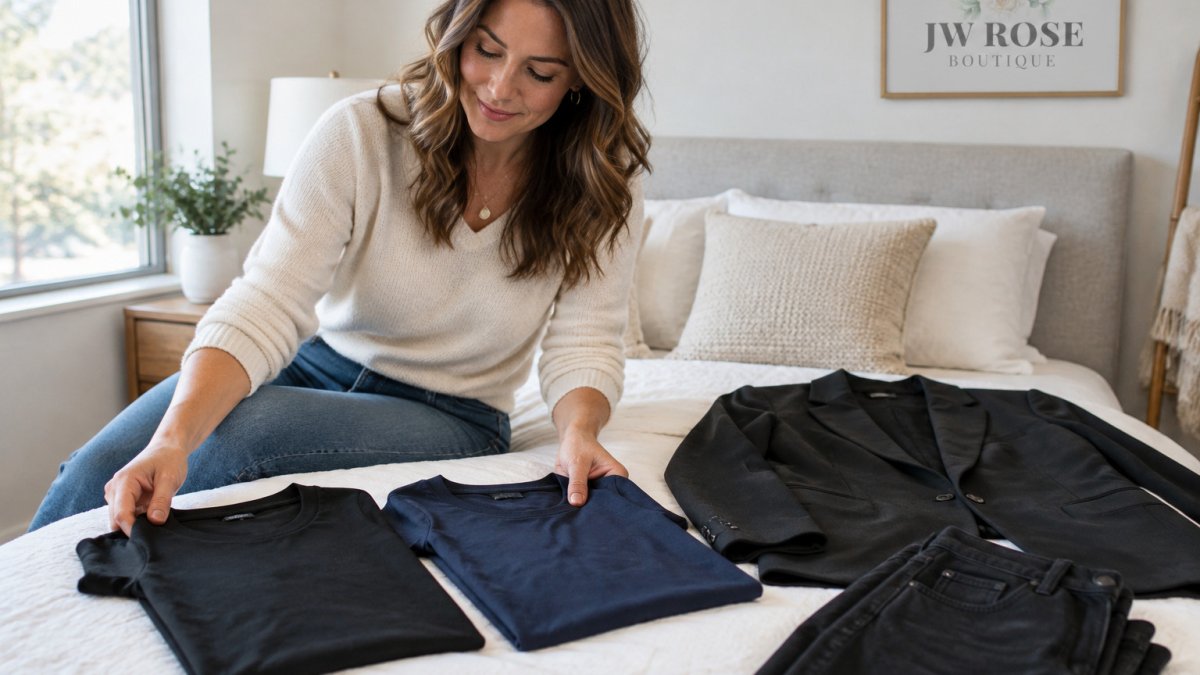
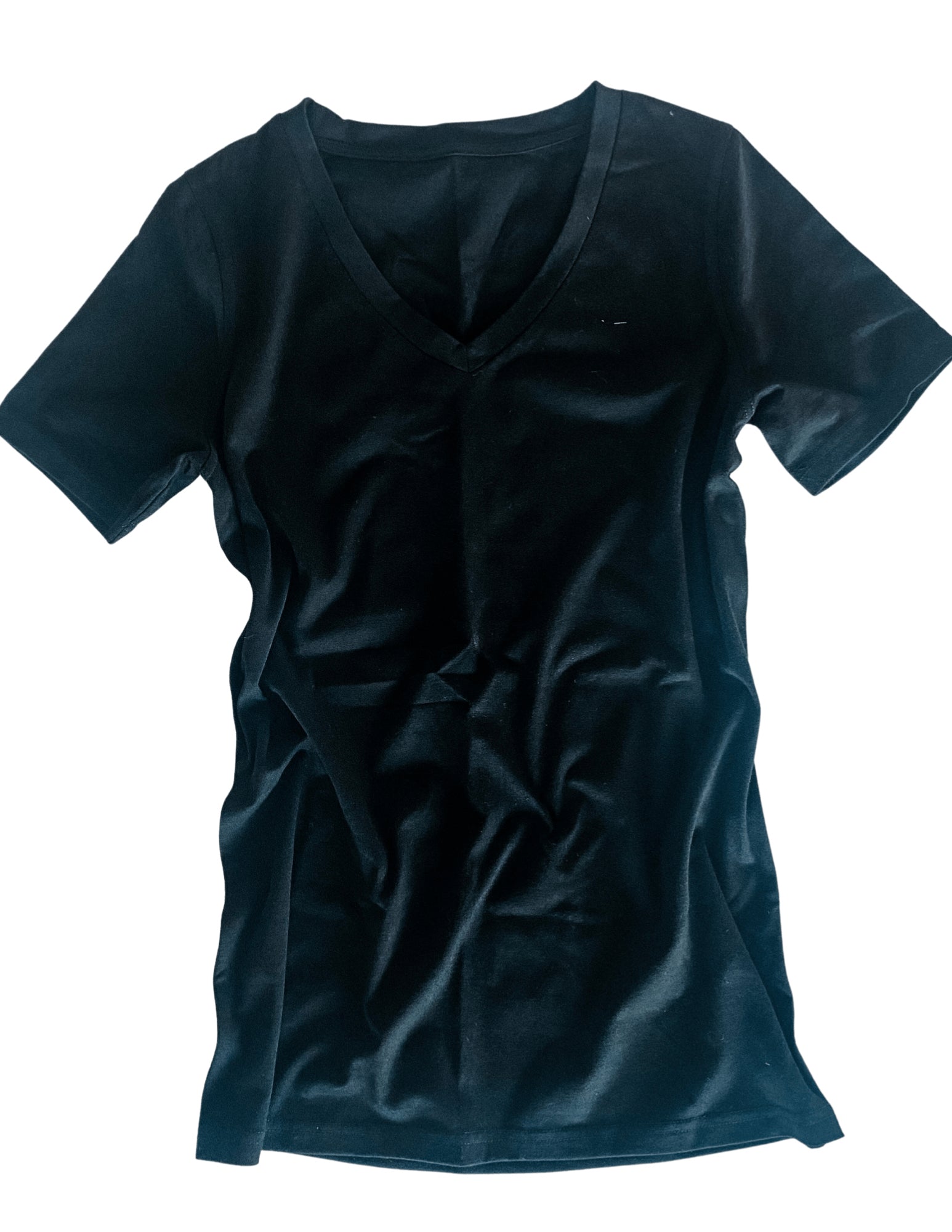
Our staples include the V-Neck Lulu Basic Tee in Black ($30.00), which layers under a blazer or wears alone with jeans. Its 35% cotton, 60% polyester and 5% spandex blend gives it medium stretch. The Black Blazer Jacket ($50.00) is the piece most work wardrobes are missing. It is classy, functional, and pairs with almost anything. The KanCan High Rise Super Skinny Black Jeans ($60.00) are soft and stretchy, though they are final sale, so check sizing carefully before buying. The Gossip Boots in Whisky ($69.99) add a 2-inch chunky heel and pair well with both leggings and jeans.
Choosing a Cohesive Color Palette
Pick three to four base colors that work together, such as black, navy, and a warm neutral, then add one accent. Stick to that palette for most pieces so everything mixes without effort. The V-Neck Lulu Basic Tee also comes in Dark Blue, which slots neatly into a black-and-navy scheme.
Building Capsule Wardrobes on Different Budgets
You do not need a large budget to start. Begin with two or three pieces each season and fill gaps as your closet shows them. Buying one versatile blazer and one pair of quality jeans will do more for your capsule than ten trend pieces. Spread purchases across the year so the wardrobe grows without a single expensive shopping trip.
The article lists several staple pieces, each with a price and a note on how it works in a capsule.
| Piece | Price | Key note |
|---|---|---|
| V-Neck Lulu Basic Tee in Black | $30.00 | Layers under a blazer or wears alone |
| Black Blazer Jacket | $50.00 | Pairs with almost anything |
| KanCan High Rise Super Skinny Black Jeans | $60.00 | Final sale, check sizing |
| Gossip Boots in Whisky | $69.99 | 2-inch chunky heel |
Price
Capsule Wardrobe Outfit Ideas and Mix-and-Match Planning
Planning outfits before you dress saves time on busy mornings. Lay out one top, one bottom, and one layer each Sunday evening for the week ahead. Note which pieces you reached for most and which sat untouched.
Try this simple method: pick one base item, then pair it with two different bottoms and two different layers. You will have four distinct looks from three purchases. The Black Blazer over the Black Tee with black jeans reads polished for work. The same tee under the blazer with the Whisky boots reads relaxed for the weekend.
To make the capsule measurable, run a two-week outfit log. Each morning, write down the pieces you wore and a one-word note on comfort. At the end of two weeks, count how many distinct outfits you built and how many times each piece appeared. A capsule is working when most pieces appear at least twice and no piece sits unworn. If a piece never appears, it is a candidate to remove at the next edit rather than a reason to buy more.
A second measure is cost per wear. Divide the price by the number of times you expect to wear the item in a year. A $50.00 blazer worn twice a week for a season lands near $2.00 per wear, while a trend piece worn once stays expensive no matter how low the tag. Use this number to decide between two similar purchases: the one with the lower projected cost per wear usually earns its place.
Test combinations in batches rather than one at a time. Choose three tops, two bottoms, and two layers, and lay every valid combination on the bed. Photograph the ones that work and keep the photos in a phone album labeled by season. On busy mornings, open the album instead of the closet. This turns mix-and-match planning into a repeatable system rather than a weekly scramble.
Watch out: a capsule can look complete on paper but fail in real life if the pieces don't layer comfortably. Test each combination by sitting, reaching, and walking in it before you commit the outfit to your album. If a layer bunches or a waistband digs, the combination will not survive a full day, no matter how good it looks on the bed.
Capsule Wardrobe Checklist for Every Season
Use this checklist when you refresh your capsule:
- Three to four core tops in your palette
- Two versatile bottoms, such as dark jeans and a neutral trouser
- One structured layer, like a blazer
- One pair of everyday shoes and one dressier pair
- Seasonal layer for weather in your area
- Count your pieces and confirm you can build a full week of outfits
Review the list at each season change and retire anything that no longer earns its place.
Fitting, Sizing and Care for Your Capsule Pieces
Fit matters more in a capsule because every piece has to work with the rest. The V-Neck Lulu Basic Tee runs true to size for a slim fit, so size up if you want a looser feel. Check the listing details for each piece before ordering, and compare measurements with something you already own that fits well.
Care keeps capsule pieces working longer. Follow the care label on each item, and rotate pieces so none wears out faster than the rest. For guidance on choosing sizes when shopping online, see our how to find your clothing size online steps, and for fabrics that stand up to busy schedules, read our guide to fabrics for busy lifestyles. Our comfortable work pants guide covers fit for bottoms in more detail.
Start Your Capsule Wardrobe With One Outfit This Week
You do not need to overhaul your closet to begin. Choose one outfit from pieces you already own, wear it this week, and notice what you reach for. Then add a single piece that fills the gap, such as the Black Blazer Jacket at $50.00, and build from there.
At JW Rose Boutique, our shop team is happy to help you choose pieces that fit your palette. Shop now and build your first capsule one outfit at a time.
Frequently Asked Questions
What is a capsule wardrobe?
A capsule wardrobe is a small, curated set of clothing pieces that mix and match easily to create many outfits. Most versions use a base of neutral tops, bottoms, outerwear and shoes, plus a few accent pieces for variety. The goal is fewer, more versatile garments that suit your lifestyle, so getting dressed takes less time and every item earns its place in your closet.
How many pieces should be in a capsule wardrobe?
There is no single correct number. Many people settle somewhere between roughly 30 and 40 items per season, including outerwear and shoes, but the right count depends on your climate, work dress code and how often you do laundry. Start by counting the outfits you actually wear in a typical week, then build enough pieces to cover those occasions without repeating items too often.
How do I start building a capsule wardrobe?
Begin by editing what you already own. Remove anything that doesn't fit, you don't wear, or that makes you feel unlike yourself. Then identify your lifestyle needs, such as office days, weekends or school runs. Choose a cohesive color palette of three to four neutrals plus one or two accents, and fill the gaps with versatile basics like a black blazer, well-fitting jeans and a V-neck tee.
Can I build a capsule wardrobe with clothes I already own?
Yes, and this is the most affordable approach. Sort your closet by category, keep pieces that coordinate with your chosen palette and suit your daily life, and set aside items that need repair or tailoring. You will usually find that a few neutral basics and one or two strong outerwear pieces form the core, and you only need to add a small number of gaps later.
How often should I update a capsule wardrobe?
Review your capsule at the start of each season. Check what you wore most, what needs repair, and whether your lifestyle has changed. Replace items only when they wear out or stop serving your routine. Updating a few pieces per season keeps the wardrobe fresh while preserving the cohesive system that makes it work.
